
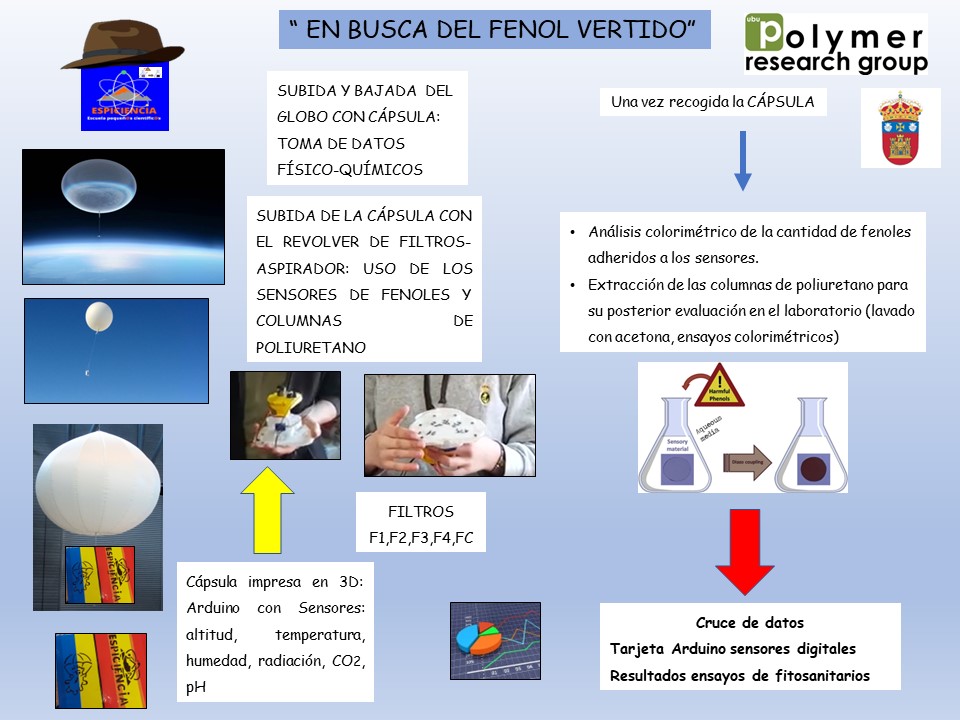
“In search of the spilled phenol”
The use of plant protection products in agriculture is an increasingly pressing environmental problem. Their indiscriminate use causes loss of biodiversity, increased resistance in the organisms that cause plant pests and diseases, health problems for farmers due to toxic substances such as phenols, and increased greenhouse gases such as halides and carbon dioxide. Phenols are polluting toxins present in human activity. They are used in the chemical, petrochemical and pharmaceutical industries to make drugs, plant protection products, household chemicals, dyes and polymers. The presence of phenols in the natural environment is due to the use and degradation of pesticides and fungicides. The University of Burgos has developed phenol sensors that are very sensitive to the presence of these compounds. Detection takes place when the sensor, in the form of a thin film, is immersed in water; the material swells and, if phenols are present, the film changes colour. In this way it is possible to recognise their presence immediately and with the naked eye. Afterwards, with a smartphone and the “ColorMeter” app, an RGB analysis of the resulting colour is carried out, thus quantifying the concentration of phenols. This system means significant cost savings and can be carried out by a person without advanced technical training. From the Espiciencia School of Young Scientists, we have contacted them and they offer us the possibility of testing their effectiveness in our capsule. The presence of chlorine in the atmosphere can also be an indicator of an excess of organochlorine pesticides. It can be captured using polyurethane foam tubes and the subsequent analysis can also be done by relatively simple colorimetric methods. With this experience, we want to find out about the presence of phenols at different heights, as well as the concentration of atmospheric chlorine, and relate it to other chemical parameters such as pH, CO2 concentration or radiation, in order to estimate the pollution caused by the application of plant protection products at different heights through the atmosphere and study its distribution. In addition, with this experience we will be able to highlight the use of these sensors to determine pesticide concentration under conditions of low gas pressure and low temperatures.
Follow us on:
http://www.espiciencia.com Twitter: @deaymerichb Facebook: https://www.facebook.com/bdeaymerichvadillo Instagram: deaymerichvadillo Youtube: https://www.youtube.com/channel/UCO5QuSDXQ1cDtptdQP4G7Qw #Espiciencia