
Author: Josep Curto Lapeira
In this monograph, part of the core elements of the International Baccalaureate, I have investigated how variations in temperature and atmospheric pressure affect the ascent speed of a sounding balloon. My aim was to develop a mathematical model able to predict vertical speed in real time, using a small number of variables that can be measured with basic sensors, such as the amount of helium in the balloon and the atmospheric conditions.
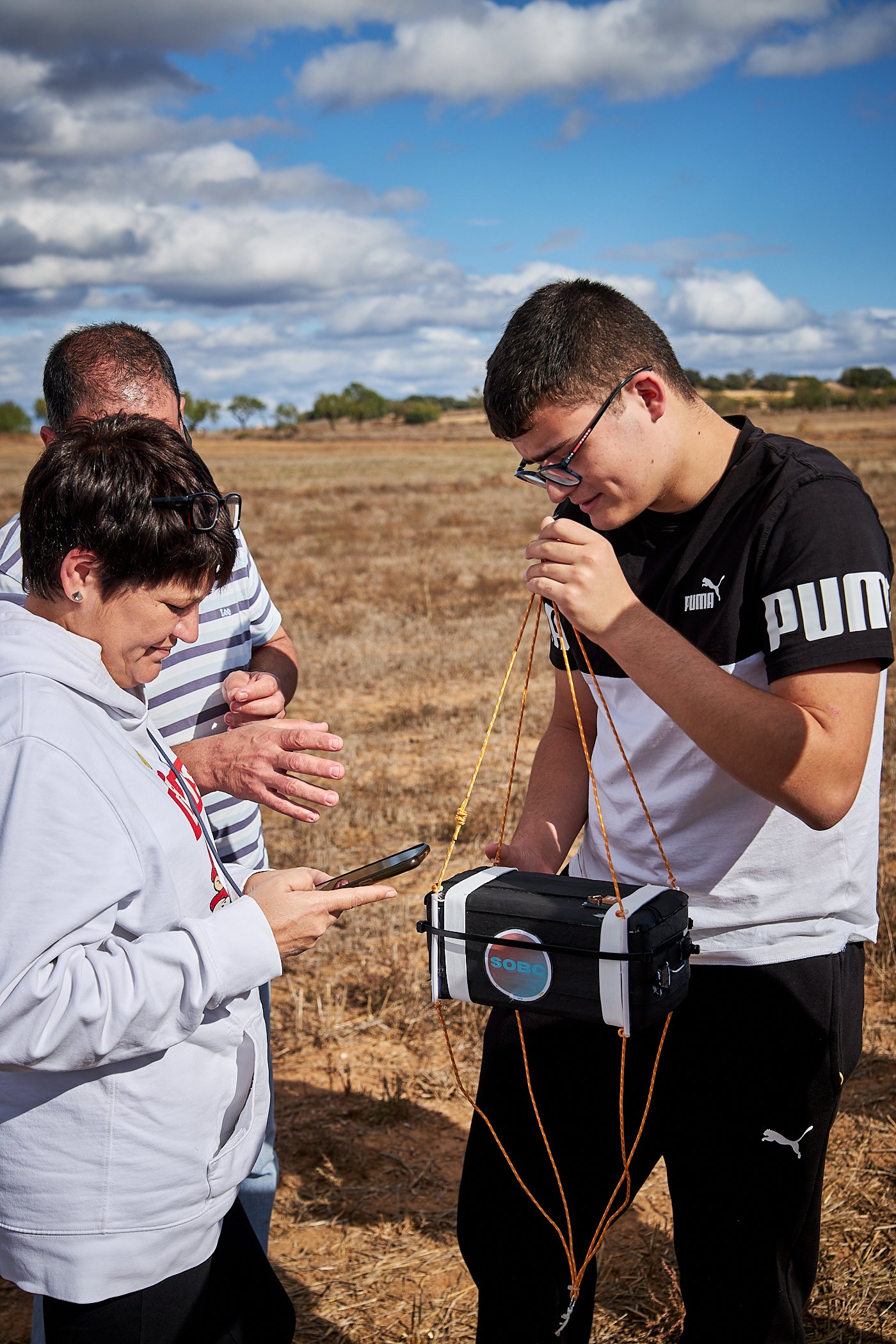
My interest in this subject began several years ago, thanks to the Servet Project, in which I have taken an active part from the Servet V mission to Servet X (with the exception of Servet VI). During these experiences I gained practical knowledge about launching and recovering sounding balloons, which has been key to the development of this work.
To build the model I considered the three main forces involved: buoyancy (according to Archimedes’ principle), aerodynamic drag and gravity. The experimental data used come from meteorological launches carried out in Catalonia, which guarantees the reliability of the initial conditions and makes it easier to compare the theoretical results with real data.


The proposed model is validated with a reasonable statistical fit and makes it possible to predict general trends in ascent speed. However, I have identified limitations such as the use of a constant drag coefficient and the geometric simplification of the balloon, which does not reflect its deformation with altitude. These approximations could be refined in future work by incorporating variable coefficients and additional validation with balloons of different configurations. Despite these limitations, I consider that this model is a valuable tool, providing a solid basis for future research into the dynamics of sounding balloons.